We value your privacy
We use cookies to analyze traffic and improve your experience. You can accept all, decline non-essential cookies, or customize your preferences. See our privacy policy.
Mejix · Legacy ERP Modernization
Your Legacy ERP Doesn't Need to Be Replaced
It Needs to Evolve
Modernize SAP, Oracle, and Salesforce in 6 months — not 3 years.
Zero downtime. Full data preservation. Phased and risk-mitigated.
02 / 08 · The Legacy ERP Trap
Stuck between two impossible choices.
Most US enterprises run on ERP systems built for a 2004–2008 architecture. Both standard responses hurt — there's a third option.
Choice 1 — Keep the legacy system
Bleeding cash, losing talent.
- End-of-life vendor support, premium pricing.
- Can't hire engineers who want to work on 20-year-old tech.
- Compliance and audit risk escalates each year.
- Innovation blocked — the system is the constraint.
Choice 2 — Rip-and-replace
$3–5M, 18–36 months, real risk.
- $3–5M+ investment plus 40% typical overrun.
- 24–48 hour cutover window — revenue exposure.
- 40% of replacements have data integrity issues.
- User adoption drops 20–30% post-cutover.
Choice 3 — Modernize strategically
$400–600K, 6 months, zero downtime.
- Keep operations running — phased, parallel migration.
- Move 80% of data and business logic in 6 months.
- Pilot first, measure, then scale at low marginal cost.
- Easy rollback — your team owns the system.
03 / 08 · The Real Cost of Inaction
Doing nothing is the most expensive option.
One realistic scenario — a US manufacturer running 12 plants on a fully customized SAP from 2008.
Today
Manufacturing · $150M revenue · SAP since 2008
$1.3M
Annual ERP run-rate
Extended support + 3 FTEs + manual workarounds + audit overhead.
Rip-and-replace
Software + integration + change mgmt
$3.5–5.5M
Project cost (40% over-run typical)
18–36 months timeline. 24–48 hr cutover risk.
Mejix modernization
Phased, integrated, zero downtime
$430–570K
Total investment
6 months. ~$400K/yr ongoing savings. Easy rollback.
5-year ROI
~$2M cumulative savings.
Year-1 net
$600K saved
Years 2–5
$400K / yr
04 / 08 · Why Standard Approaches Fail
Why rip-and-replace projects fail — and cloud migration alone doesn't help.
40% of replacement projects run over budget or get cancelled. Here's why — and what to do instead.
Full process redesign mid-flight
Teams can't resist 'building it better' — extending the project 6–12 months and inflating scope beyond the original budget.
Data migration complexity
Legacy systems hold 10,000+ customizations and non-standard fields. 30–40% of data quality issues are discovered after cutover, not before.
Business continuity risk
A 24–48 hour cutover puts revenue on the line. An 8-hour outage at one mid-sized retailer cost $2M in lost orders.
Change management failure
Users trained for 10–20 years on the old system reject the new one. Productivity drops 20–30% and support costs spike for months.
Lift-and-shift isn't modernization
Moving SAP to AWS just makes legacy more expensive. Customization debt, compliance overhead, and slow performance all come along for the ride.
The pattern
40% over budget. 60% over timeline. Old problems on new infrastructure.
Average overrun
$800K–1.2M, 6–12 months.
User adoption
Drops 20–30% post-cutover.
Real outcome
No real modernization achieved.
05 / 08 · The Modernization Framework
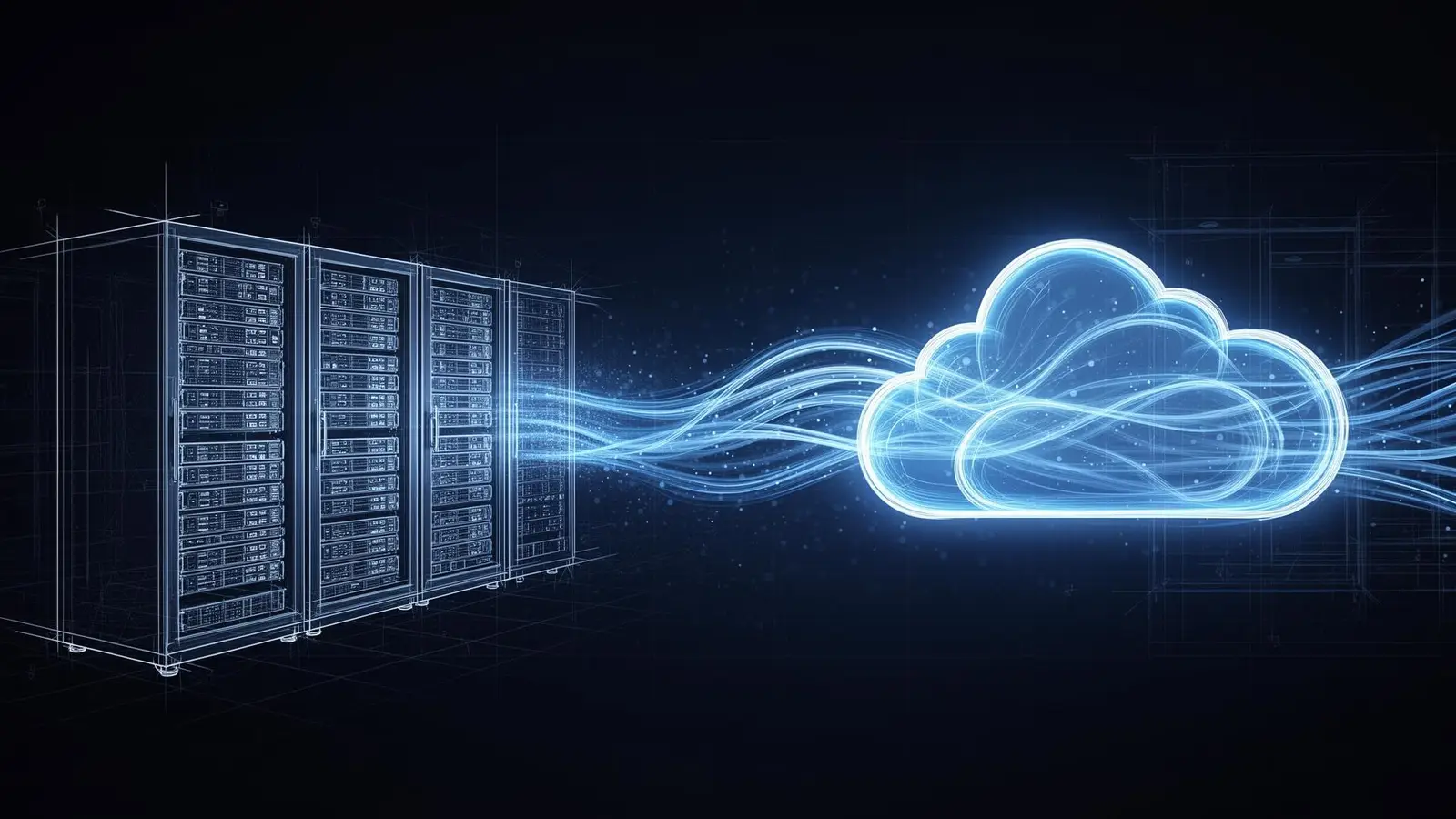
Phased, parallel,
zero downtime.
Three phases. Six months. Built around your operations, not against them.
Assess & pilot
Audit the legacy system. Tag every module: keep, migrate, retire. Build the integration layer. Pilot one module (e.g. GL) in parallel — measure data integrity, performance, adoption.
Migrate core processes
Move ~80% of business processes (GL, AR, AP, inventory, reporting) to the modern stack. Legacy keeps running in parallel. Real-time dual-write keeps data in sync.
Retire legacy & optimize
Migrate or sunset the remaining 20%. Legacy goes read-only for audit. Modern stack is primary. Team is trained, playbook documented, ownership transferred.
Key principles
06 / 08 · Real Proof
Manufacturer · zero downtime · 6 months.
SAP-2008 to a modern cloud ERP across 12 plants — without stopping a single production line.
- Industry
- Discrete manufacturing — valves, pumps, industrial equipment
- Size
- $150M revenue · 500+ employees · 12 plants
- Stack
- SAP 2008 (legacy) → NetSuite + integration layer + analytics
- Constraint
- 24/7 production — no acceptable cutover window
Project investment
−87%
Time to modern stack
−75%
Production downtime
Zero
Annual ERP run-rate
−$400K / yr
Year 2+
~$2M saved
07 / 08 · Sizing
Size this to your operation.
Same framework. Three pre-shaped engagements — flexed to module count and headcount.
Small
1–2 core modules
<200 employees · 3–4 months
Medium
3–5 modules
200–500 employees · 5–6 months
Large
6+ modules · multi-site
500+ employees · 6–9 months
Quick calc
Current ERP cost
Software + labor + audit = X
Annual savings
~40–50% of X post-migration
Example
$1.2M → $400K / yr saved
08 / 08 · Common questions
Quick answers.
The questions IT, finance, and operations leaders ask before greenlighting an ERP modernization.